Two genuinely different formulas that share a name. Acoustic Doppler handles a moving source and a moving observer in a real medium; the relativistic longitudinal shift handles light, where the whole thing collapses to sqrt((1-b)/(1+b)). The page runs one or the other and shows what the wrong one would have said, because the classic mistake is feeding the speed of light into the acoustic ratio.

Reflected light off a coated surface: reflectance and hue from film thickness, refractive index and incidence angle, with a plot across the visible band.
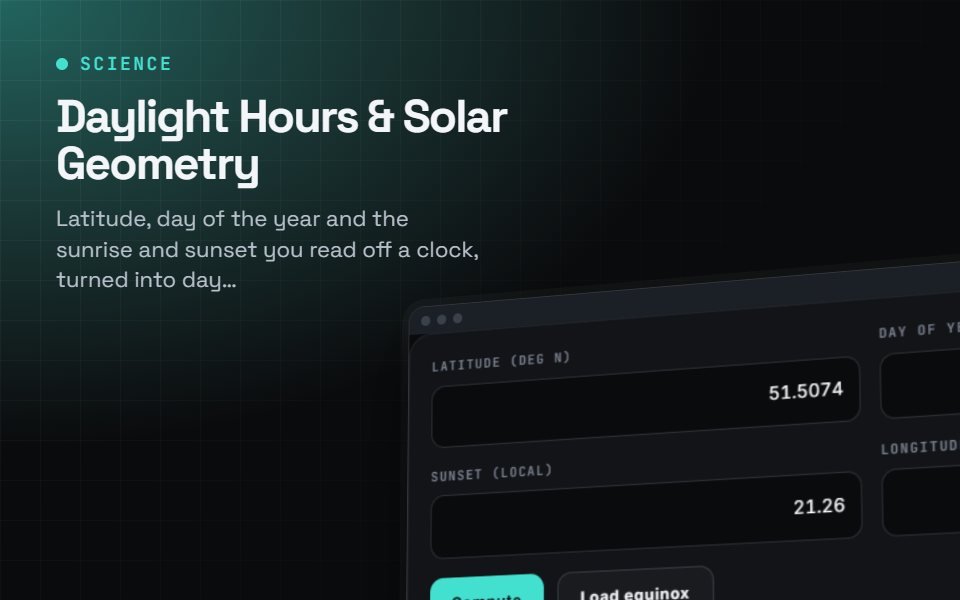
Latitude, day of the year and the sunrise and sunset you read off a clock, turned into day length, solar noon, noon sun elevation and solar declination, each checked against the NOAA solar-position series.
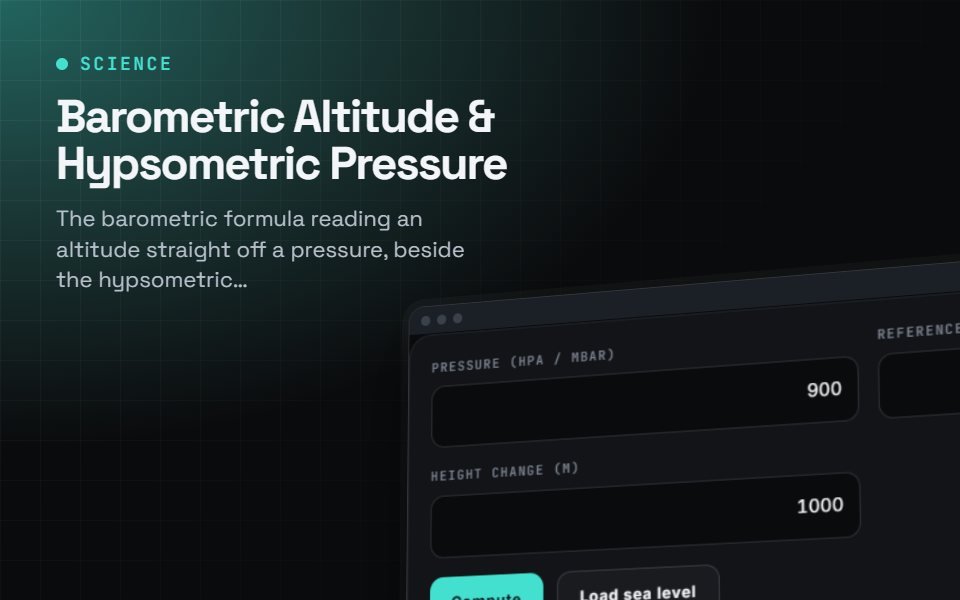
The barometric formula reading an altitude straight off a pressure, beside the hypsometric equation turning a known height change and temperature into the pressure you should expect to read there.

Convert between Mw, mb, Ms and ML with the published linear relations, then read the radiated energy in joules and in tonnes of TNT.
Break-even volume and revenue from fixed and variable costs, plus profit and margin at a target volume. Handles the case where there is no break-even at all.

Six cover-letter templates driven by a pasted job description, with a real ATS keyword-match readout that stems and de-duplicates, plus an ASCII-safe plain-text export.
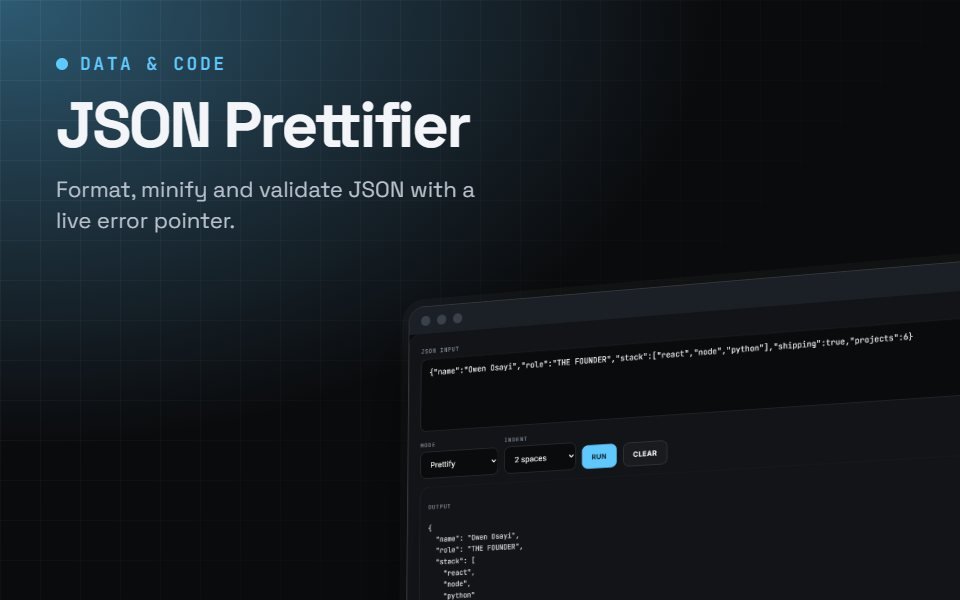
Format, minify and validate JSON with a live error pointer.

Encode and decode Base64 text or files, UTF-8 safe.
